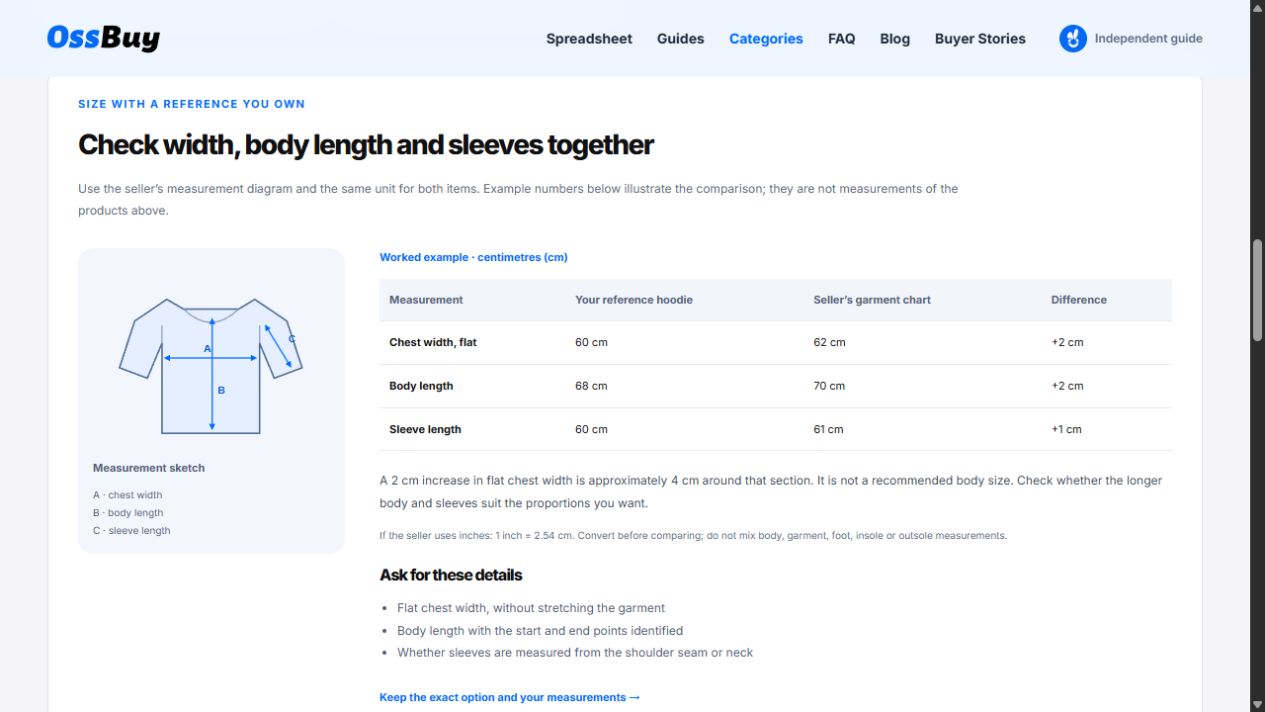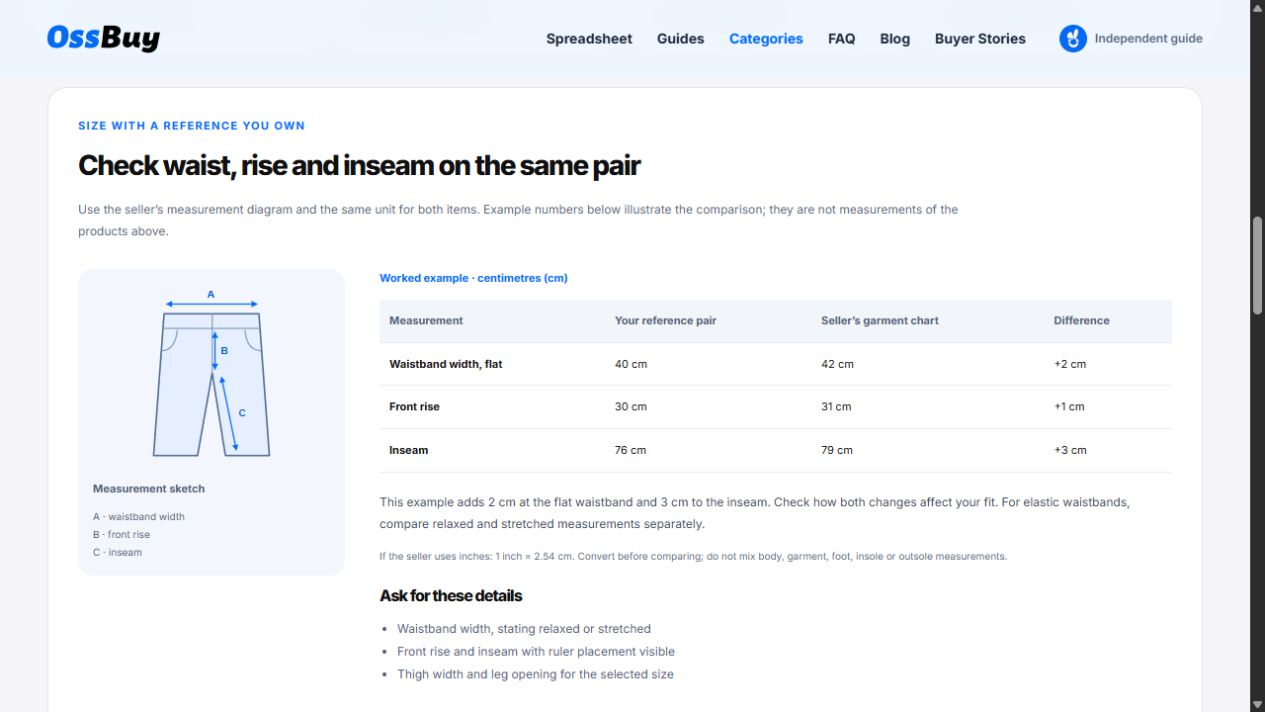

A foot measurement describes the wearer; an insole measurement describes a component of the shoe; an outsole measurement describes the outside. Compare like with like, check width as well as length, and ask what an unexplained CM label means before selecting an option.
On this page · 8 sections
Foot length, insole length and outsole length: what changes?
| Measurement | What it describes | Useful comparison |
|---|---|---|
| Foot length | The distance from the heel to the longest toe on a foot. | Use with a chart that explicitly asks for foot length. |
| Insole length | A measurement of the shoe’s insole using an identified ruler path. | Compare the same insole method on a comfortable reference pair. |
| Outsole length | The outside of the shoe, including its construction and shape. | Keep it separate from internal space and foot length. |
A 27 cm foot and a 27 cm outsole do not describe equivalent objects. Nor does a longer removable insole prove that the foot can use every part of that length. Curves, raised edges and the shape of the toe area can affect what a simple measurement tells you. Keep the method beside the figure.
This article works through the questions to resolve, rather than supplying a universal EU/UK/US conversion chart. The sneaker category contains the source listings and its shorter measurement checklist.
Build a useful foot-length reference
Use the measuring instructions attached to the chart you intend to use. For a basic standing reference, record heel-to-longest-toe length for both feet, the unit and the method. Keep the longer result visible when the two differ. Avoid substituting a familiar shoe label for a missing measurement.
Also note the socks and intended use relevant to your choice. If width or pressure across the top of the foot has been a problem with a previous shoe, record that separately. Length alone does not settle those fit questions.
Keep a second reference from a pair that you already find comfortable: its exact model and size, and an insole measurement if it can be obtained consistently. A reference is a comparison aid, not evidence that every shoe with the same label will fit.
How should you read an unexplained CM size on a shoe chart?
Ask whether CM refers to foot length, insole length or a size-system label. Nike’s official footwear guide specifically notes that the CM number on its boxes and labels differs from foot length. That is a useful reason to identify the meaning, rather than copying a label into the foot-length column.
- Check that the chart belongs to the exact model, version and size range being offered.
- Identify whether it covers adult, children’s, men’s, women’s or unisex sizing. Keep the stated system intact.
- Record the unit and what is measured. Ask for clarification if the column says only “length”.
- Follow the chart’s own between-size guidance if supplied. Do not invent a fixed amount of extra room for every shoe.
A familiar EU number is a starting reference, not a substitute for an unclear listing chart. If the chart and label disagree, keep both in your notes and resolve the exact option with the seller or agent.
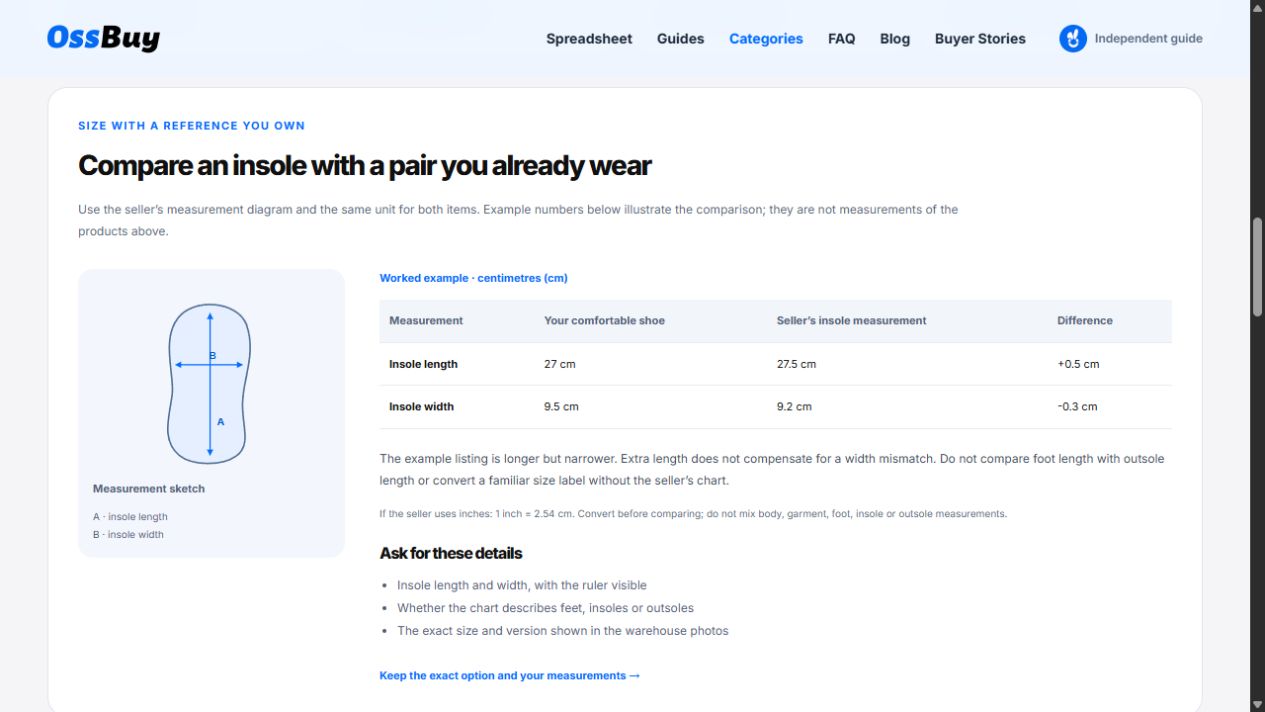
What if an insole is longer but narrower?
| Measurement | Comfortable reference | Teaching A | Teaching B |
|---|---|---|---|
| Length | 27.0 | 27.5 | 27.2 |
| Width at the same point | 9.5 | 9.2 | 9.6 |
| Length difference | — | +0.5 | +0.2 |
| Width difference | — | −0.3 | +0.1 |
Teaching A adds length but loses width at the compared point. The extra 0.5 cm of length does not resolve the 0.3 cm width reduction. Teaching B is closer to the reference in these two dimensions, but that alone does not establish its internal shape, heel hold or comfort.
All figures in this table are teaching numbers. They are not specifications of the source shoes below and do not identify a size you should order. If a width difference matters to you, ask for the ruler path and the relevant internal or insole details rather than declaring the longer option safer.
Which QC measurements would actually resolve the question?
Match the order option first: the listing, colour, version, size label and the pair shown in the photos should agree. Then request a measurement that answers your specific uncertainty. A picture of an outsole beside a tape does not answer a request for insole length.
- Ask for a view showing the full ruler and both measurement endpoints.
- For an insole, identify whether it was removed, whether it lies flat and which line was followed.
- For width, identify the point across the forefoot instead of comparing widths taken at different positions.
- Check both shoes visually and ask about a repeated measurement when a result is unclear.
Do not request forceful removal of a fixed insole. Ask what can be measured without damaging the shoe and record the limitation. Ruler photos are sizing evidence; they do not establish authenticity, durability or cushioning performance.
Apply the checks to actual source shoe listings
These two actual source records are discovery candidates. Their photos and observed prices are available; selected-size measurements, material performance and personal shipping quotes remain unconfirmed here.
 Photo unavailable
Nike Air Force 1 White Sneakers
Shoes
$14.35 USDCaptured
View on MaisonLooks ↗ Photo unavailable
Nike Shox TL Triple Black Sneakers
Shoes
$42.70 USDCaptured
View on MaisonLooks ↗Source photos are catalogue references, not warehouse QC or product-test evidence. Each source opens MaisonLooks in a new tab.
The source cards show the photographs, titles and observed prices available in this catalogue snapshot. They do not establish which size chart or insole dimensions apply to your selected option. Open the exact source, record the option, then ask for the missing measurement type and method.
Use the comparison workspace to keep the two source references and your own findings separate. If your starting constraint is item price, the shoes-under-$25 filter example explains what that shortlist does and does not show.
A shoe measurement request you can copy
Shoe sizing request
For [exact listing link], option [colour / version / size], please confirm what the size chart’s length or CM column means. If possible without damaging the shoe, show insole length and width at [identified point], with the full ruler and both endpoints visible. My reference pair measures [your figures] using [method]. Please confirm the size label on the actual pair and explain any difference from the chart.
Replace the bracketed details before sending. Keep the reply’s date and exact option in your notes. If the available photo uses a different method, ask a follow-up instead of converting it with a guessed allowance.
Common shoe sizing decisions
Should I automatically size up when I am between sizes?
Use the exact chart’s guidance and the available width or shape information. A larger size can change more than length. When the chart’s meaning is unresolved, “size up” does not resolve the original ambiguity.
Can the same EU size fit differently across listings?
A shared label does not establish the same dimensions or last shape. Keep model, version and chart identity together. A reference pair is most useful when its measurements and method are recorded as well as its label.
Does removing the shoebox settle the shipping estimate?
No. Ask for a packed quote and consider protection. The parcel-volume example explains why dimensions matter without treating a hypothetical carrier rule as a real quote.
Sources & scope
- Nike: men’s footwear size guide
Nike explicitly distinguishes a box/label CM size from foot length. Its chart applies to the products covered by Nike’s guide, not automatically to a source listing here.
External references checked on 26 October 2026. Product capture dates are shown separately on their source cards.
Put it into practice
Browse shoe source photos →Editorial note: this article documents this site’s tools, source records and labelled educational examples. It is not a buyer review or a report of product testing. See how this independent guide works.